Roofing Business Insurance: A Complete Guide for Roofing Contractors, Companies & Insurance Costs (2025 Edition)
Running a roofing business in the U.S. means dealing with high-risk work, strict building codes, unpredictable weather, and increasing liability exposures. Moreover, roofing contractors must balance safety, compliance, and financial protection. Whether you are an individual roofer, a growing roofing company, or a self-employed contractor, having the right roofing business insurance is essential. In fact, it not only supports legal compliance but also helps you win contracts, protect workers, and secure your business future.
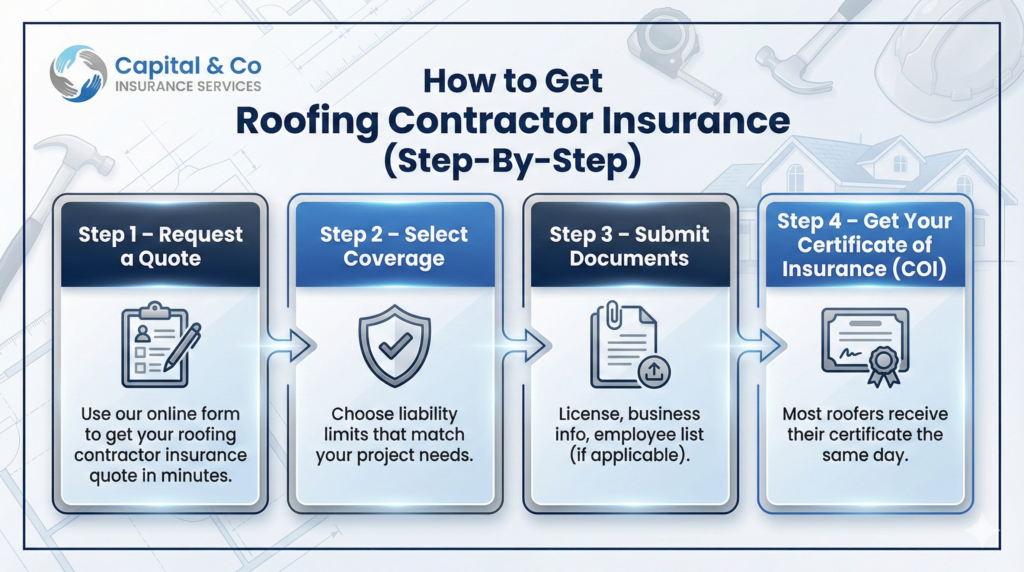
At Capital & Co Insurance Services, we specialize in affordable, trade-specific coverage for contractors across all 50 states. Additionally, this complete guide explains everything you need to know about roofing general liability insurance, insurance requirements, costs, coverage types, how to get a roofing contractor insurance quote, and why choosing the right policy matters.
What Is Roofing Business Insurance?
Roofing business insurance is a customized coverage package that protects roofing contractors and businesses from lawsuits, property damage, injuries, equipment loss, and job-site risks. Because roofing is one of the highest-risk construction trades, most states, general contractors, and homeowners require proof of roofing general liability insurance before work begins.
A strong policy protects you from several risks, including:
Property damage claims
Client injuries
Worker accidents
Tools and equipment theft
Job-site fires
Ladder and height-related injuries
Faulty installation claims
Storm damage during construction
Without proper coverage, even a small accident can become expensive and threaten your business.
Why Roofing Contractors MUST Have General Liability Insurance
General liability is the most important policy for roofers. It protects your business when a client, neighbor, or third party claims you caused damage or injury.
Example:
A roofer accidentally drops a tile through a customer’s skylight. The repair costs $2,500. Roofing GL insurance pays for the damages, not you.
Roofing Liability Claims Are Common
- Falling debris
- Leaking roofs after installation
- Water intrusion during roofing work
- Broken gutters
- Damage to landscaping or siding
That’s why roofing companies rely heavily on roofer liability insurance for protection.
Who Needs Roofing Contractor Insurance?
You should carry roofing business insurance if you are:
- Independent roofer
- Roofing subcontractor
- Roofing company owner
- Commercial roofer
- Residential roofing contractor
- Metal roof installer
- Flat roof & TPO roofing specialist
- Shingle, tile, or slate roofer
- Solar roof installer
If you work at heights, use ladders, roofing tools, or power tools, or have employees on your crew—roofing insurance is essential to protect your business, your team, and your clients.
Types of Insurance Roofing Contractors Need
1. Roofing General Liability Insurance
2. Workers’ Compensation Insurance
3. Commercial Auto Insurance
4. Tools & Equipment Coverage
5. Contractor’s Inland Marine Insurance
6. Umbrella / Excess Liability Insurance
Roofing Business Insurance Cost (2025 Guide)
t of roofing contractor insurance depends on:
Business size
Annual revenue
Number of employees
Claims history
Type of roofing work (residential/commercial)
State requirements
Why Choose Capital & Co Insurance Services?

✔ Specialized in construction & contractor insurance
✔ Affordable roofing GL insurance
✔ Fast certificates for jobs requiring urgent coverage
✔ Same-day quotes
✔ Covers all 50 U.S. states
✔ Expert insurance agents for every trade